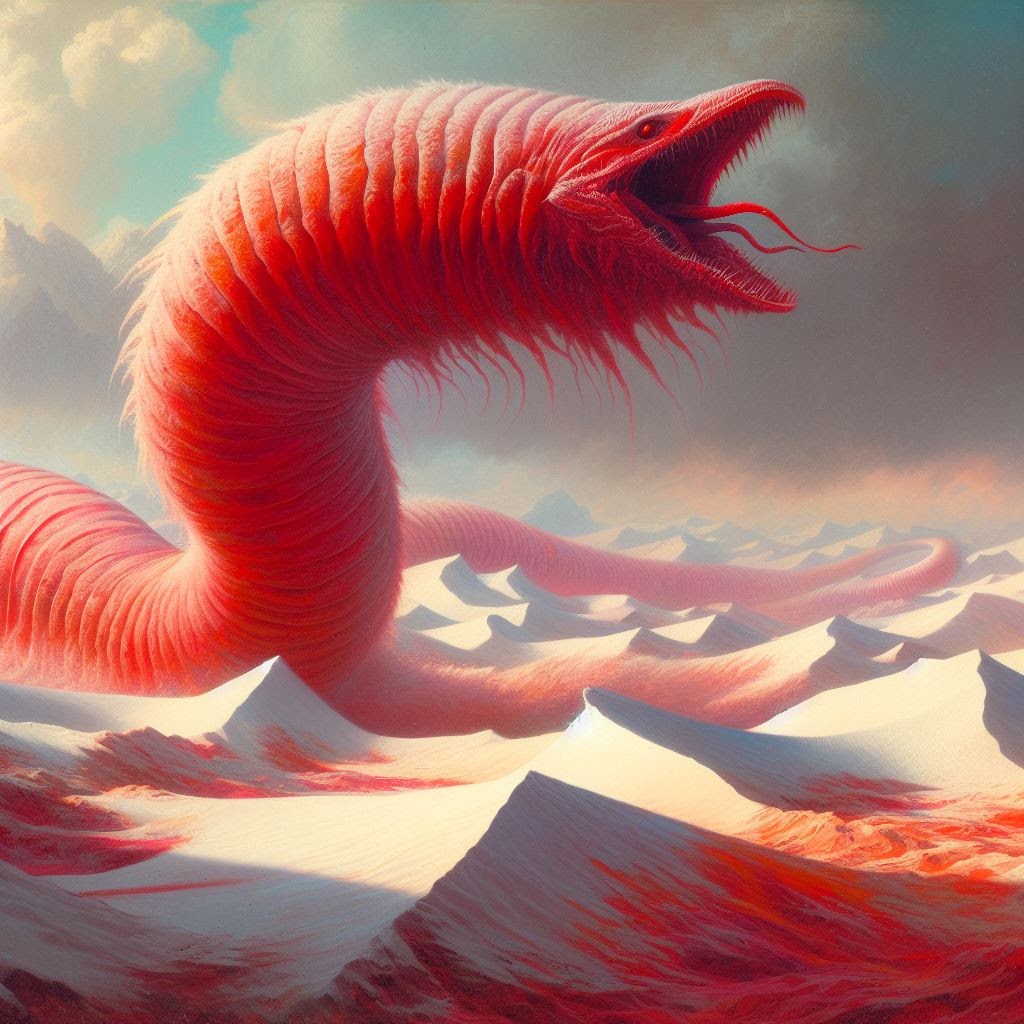
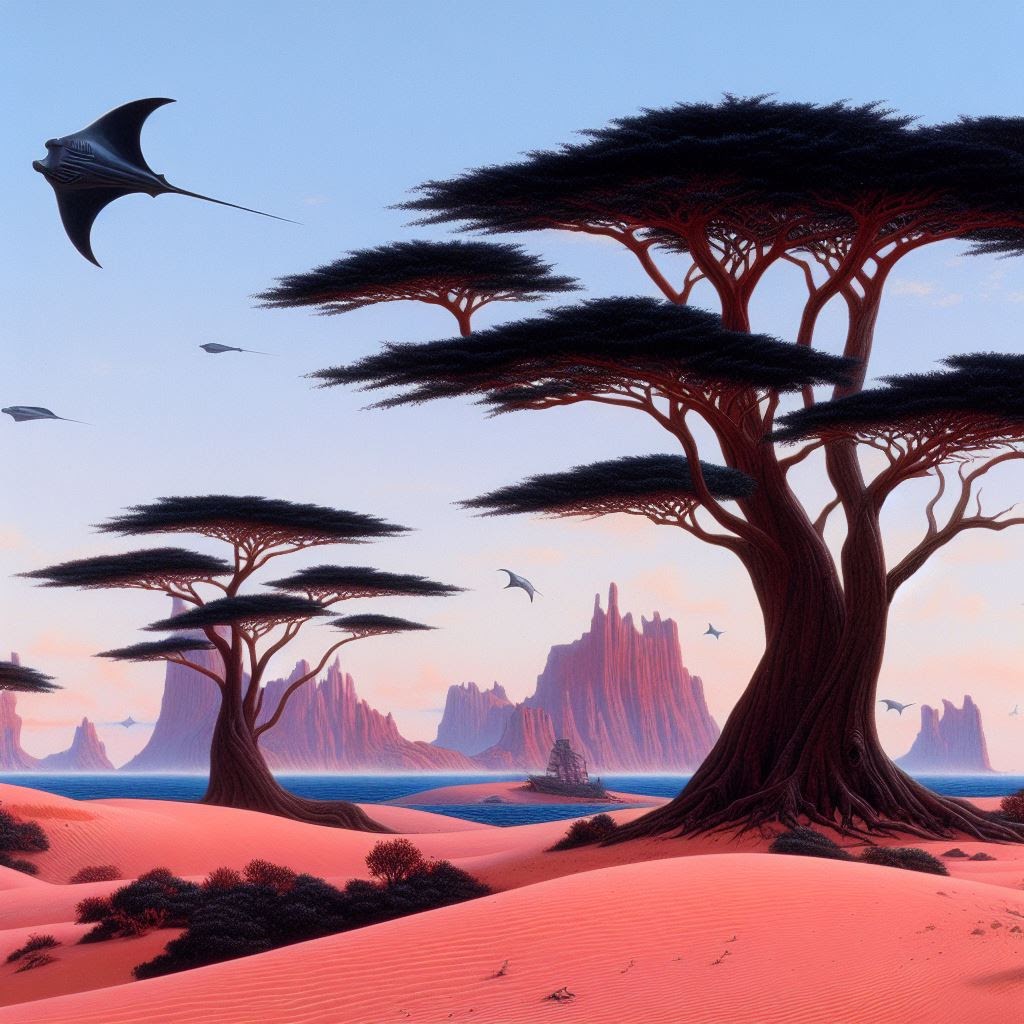
In general, the aerial creatures of Mars known as "drifters" consume food by ingesting their prey whole. This keeps most from being a great threat to human visitors, as they are limited to swallowing creatures smaller than themselves. The toxins in their tentacles are still harmful to a human, and a drifter that feels threatened or startled is likely to lash out. But most kinds will tend to avoid human-sized beings if possible.
There are, however, two main exceptions. We will discuss one today.
The whistler is a drifter that has several specialized tentacles which contain "leeching tubes". Once it has paralyzed a victim with its toxin, it inserts the leeching tubes into its prey and proceeds to suck up nutrients from the victim's body. This method of feeding allows the whistler to live off creatures larger than itself, and also to share its prey with others of its kind. In other words, they hunt in packs.
Like most drifters, the whistler propels itself by forcing air through its aeolian ventricles. This method allows it to reach roughly the speed of an average human's walking pace. Faster speeds require preparation. The whistler has a specialized bladder-like organ which it will gradually fill with highly pressurized air. To achieve top speed, the whistler will let the air out in a swift stream, pushing the animal swiftly forward and causing the high-pitched sound for which it is named.
They commonly rely on ambush tactics, using trees or rocks as cover, tethering themselves with their tentacles. Conserving their energy by remaining in one place, they can go for months without eating. Once suitable prey comes within range, they emerge and strike quickly with a speed burst.
Conversely, whistlers may simply drift on the air currents. They can even harness a favorable wind by extending a retractable fin known as the artemon, which functions as a sail. This is useful for longer migrations or excursions in search of prey. Once a potential target is spotted, a pack may stalk their quarry, gradually hemming it in on all sides. Their energy expenditure is fairly low when moving at a normal speed. If they can tire out their quarry, they will move in when it stops to rest or collapses from exhaustion. If they seek to end things more quickly, they may use the speed burst to close the distance.
Whistlers are opportunistic, and will not hesitate to feed off another predator's kill if possible. They may even scavenge carcasses that have been dead for some time. Like most drifters, they can use their tentacles to snag smaller prey, such as birds or small skyrays, which they swallow whole. The paralytic toxin numbs the animal while it is digested in the main compartment of the whistler's body. A whistler's digestive system is highly effective. Even bones and cartilage are broken down and consumed.

Whistlers have no fear of humans and will actively hunt them if they sense an opportunity. Even one sting may leave you unable to move for hours-- long enough for a whistler pack to completely exsanguinate you. Dress in thick clothing that covers the majority of your body. If you should encounter a whistler, fire is typically the most effective method of dealing with them. The gas which keeps them aloft is highly flammable. Be careful not to get caught by the resulting explosion. The whistlers are wary of fire and the sight of it may be enough to keep them at bay-- for a time. They probably can afford to outwait you.
Author's note: I had to watch this during research, so now you do too. Them's bloggin' rules.